Come Home to Vine Street
Black History Month always lands heavy for me.
Not in a performative way. In a practical way.
I’m a Black co‑founder of Missouri’s first Black‑owned brewery, standing in an 1850s public works building in the middle of the historic 18th & Vine Jazz District. I pour beer a few feet from the same streets that gave Kansas City and this country its groove. I love that. I’m proud of that. And I also know how fragile it still is.
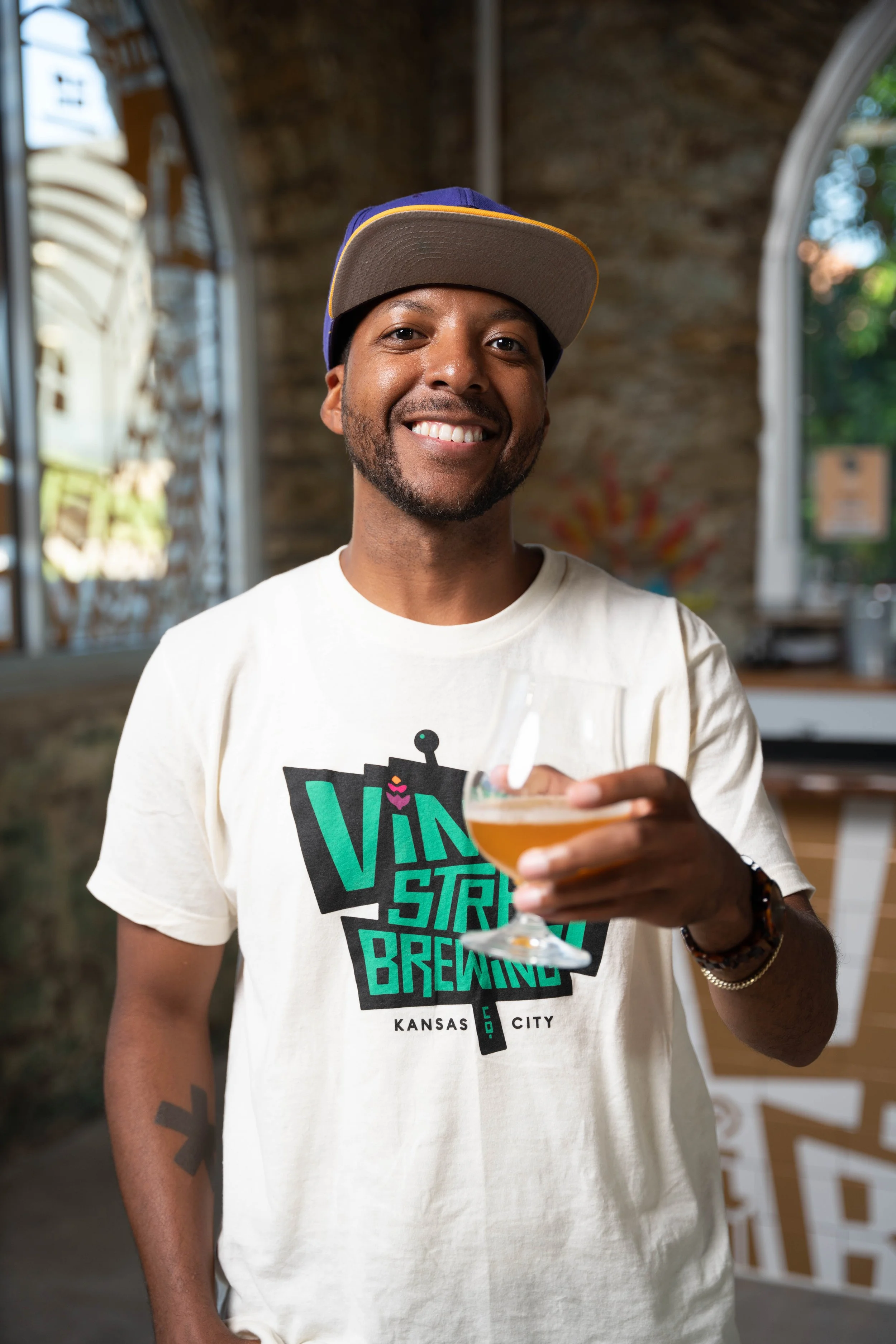
Every time you walk through our doors at 2010 Vine Street, you’re stepping into a bet we made on this neighborhood and this city – that Black ownership and Black representation shouldn’t be a special feature you read about once a year in February, but an everyday reality you can touch, taste, and sit inside.
Black ownership is not a fun fact
You’ll see it in headlines and listicles all month: “Did you know Vine Street Brewing is Missouri’s first Black‑owned brewery?”
That sentence is true. But it’s not a fun fact.
For us, Black ownership is bills, payroll, and late nights staring at numbers. It’s paperwork, licensing, inspections, and the constant tension between culture and cash. It’s being the ones who sign the lease, not just the ones on the flyer.
When you buy a beer here, you’re not just checking a box that says “support Black business.” You’re literally keeping the lights on in a building that sat empty for almost forty years. You’re funding staff, music, maintenance, and all the unglamorous infrastructure that has to exist for the vibe to be real.
Every Dream Flight, every pint of Jazzman, every low‑ABV Mkeka pour – it all moves this place one step closer to being sustainable, not just symbolic.
The kitchen at Vine Street
This year, Black History Month also marks a new chapter for us: food is finally live in the building.
Our friends at Vine Street Chicken Co. have taken over the upstairs kitchen. They’re an independently owned restaurant, with their own story and their own grind, but together we’ve decided that when you think about food at Vine Street, you should feel one house.
Beer downstairs. The kitchen upstairs. Same yellow building. Same block. Same promise.
That partnership matters for Black ownership, too. It means there are now two Black‑owned businesses sharing this address, coordinating service, and figuring out what it looks like to build something stable on a street the city forgot about for a long time.
So when you sit down with a plate from the kitchen and a beer from the bar, you’re not just eating and drinking. You’re helping prove that Black spaces rooted in history can also be viable, everyday businesses – not one‑off pop‑ups that disappear when the grant money runs out.
Why every beer here counts
We talk a lot about big ideas at Vine Street:
Kansas City as a City of Music.
18th & Vine as a living district, not a museum.
Beer as a cultural instrument, not just a commodity.
All of that is real. But here’s the other side of the story: we are still a small, fragile taproom business trying to make it month over month.
We feel it on slow nights when the room is beautiful but the drawer is light.
We feel it when weather hits and a whole weekend’s worth of plans evaporates.
We feel it when we look at the calendar and know we have to make smart, sometimes uncomfortable decisions about events, staffing, and what we can afford to carry.
That’s why I keep saying, and will keep saying:
Every beer you buy here matters.
Not in an abstract “support local” way, but in a very literal, “this keeps a Black‑owned brewery and a historic building alive” way. Your tab is part of the reason we can pay musicians fairly, keep Beer Stars on staff, fuel new recipes, and host conversations that actually move the city forward.
Dream Flights and Dr. King’s pillars
If you’ve been in the taproom, you’ve probably seen or ordered a Dream Flight – four small pours framed around the pillars we pull from Dr. King’s work: justice, love, courage, community.
That’s not a cute theme. It’s the lens we try to bring to how we host people.
Justice means naming who has been pushed out of neighborhoods like this and making sure the room doesn’t quietly reproduce that.
Love means the way we greet you at the bar, the way we talk to our neighbors, and the way we hold space for people who are still figuring out how they fit here.
Courage is opening a Black‑owned brewery on a block that didn’t feel “safe” to a lot of investors and saying we’re staying anyway.
Community is refusing to let this place become a hollow photo op – insisting it stays a real room where regulars, tourists, musicians, elders, and kids can all find themselves.
When we pour a Dream Flight, we’re not just giving you four beers. We’re asking you to sit with those words for a second and think about what they look like in your own life, on your own block, in your own circles.
Defenders of our neighborhood
There’s a line I keep coming back to when I think about Vine Street’s role in this moment:
We are going to be the defenders of our neighborhood.
For us, that means:
Defending 18th & Vine from being flattened into a brand or a backdrop.
Defending the idea that Black spaces can be joyful and serious at the same time.
Defending our people’s right to gather, to make noise, to rest, and to build something of our own without asking for permission from people who don’t even come down here.
We can’t do that if we’re not here.
So Black History Month at Vine Street isn’t just about posters, playlists, or one special event. It’s about tightening our grip on this corner of the city and saying: this is ours, and we’re going to steward it well.
A message to our neighbors
If you live in the neighborhood and you haven’t made it through the doors yet, this part is for you.
Maybe you’ve driven by and wondered if this place is for you.
Maybe you’ve meant to stop in but life kept life‑ing.
Maybe you remember what this block used to be and you’re still not sure how to feel about what’s here now.
I get it.
My invitation is simple:
Come home to Vine Street.
Come see what we’re building inside this old yellow building.
Come taste beer brewed by people who actually live here.
Come grab food from the kitchen and sit in a room where Black music, Black stories, and Black ownership are not side notes – they’re the whole point.
You don’t have to wait for a big event. You don’t have to know anything about beer. You just have to show up, be curious, and be willing to share space with your neighbors.
Black history is not something we look at behind glass. It’s something we live, protect, and pour – one night, one set, one beer at a time.
Come home to Vine Street.