I Was Wrong About Sports
I have spent years telling anyone who would listen that Kansas City should lead with music. That jazz is the city's most globally legible cultural export. That Nashville built an entire economy around a single genre, and Kansas City could do something similar if it ever got serious about the infrastructure. I have said this at City Hall. I have said it in UNESCO working group meetings. I have said it to my own staff at the brewery while pointing out the window at 18th and Vine.
I was not wrong about music. But I was wrong about sports.
Last week, Startland News published a recap from the Back2KC event in which Neal Sharma, fresh off his FIFA World Cup run as vice president of KC2026's board, made the case that Kansas City should build its brand around sports. "Sports throughout this region is one of the flags that we can really now proudly fly," said Tyler Knecht. Sharma talked about sports media, sports tech, sports health, youth sports. He called it "escape velocity."
When I read it, I was irritated. The music advocate in me heard the same thing I always hear: another room full of people excited about Kansas City's future who never once mentioned jazz, never mentioned 18th and Vine, never mentioned the cultural infrastructure that gives this city its actual soul. I almost wrote a rebuttal. I started drafting one in my head before my phone died.
Then I sat with it.
And I realized the problem was not Sharma's argument. The problem was mine. Not because music does not matter. It does. Not because the sports case is stronger than the music case. It is not. The problem is that I had been making the same mistake as the sports boosters, just from the opposite side. I was splitting the story in half.
Kansas City does not need to choose between sports and music. It does not need to pick one lane and market itself accordingly. The reason is simple, and the evidence is sitting two blocks from where I brew beer every day: 18th and Vine already answered this question a hundred years ago. Sports, music, and barbecue were never three separate industries in Kansas City. They were one culture, produced by one community, on the same blocks, during the same decades.
Start with the ground.
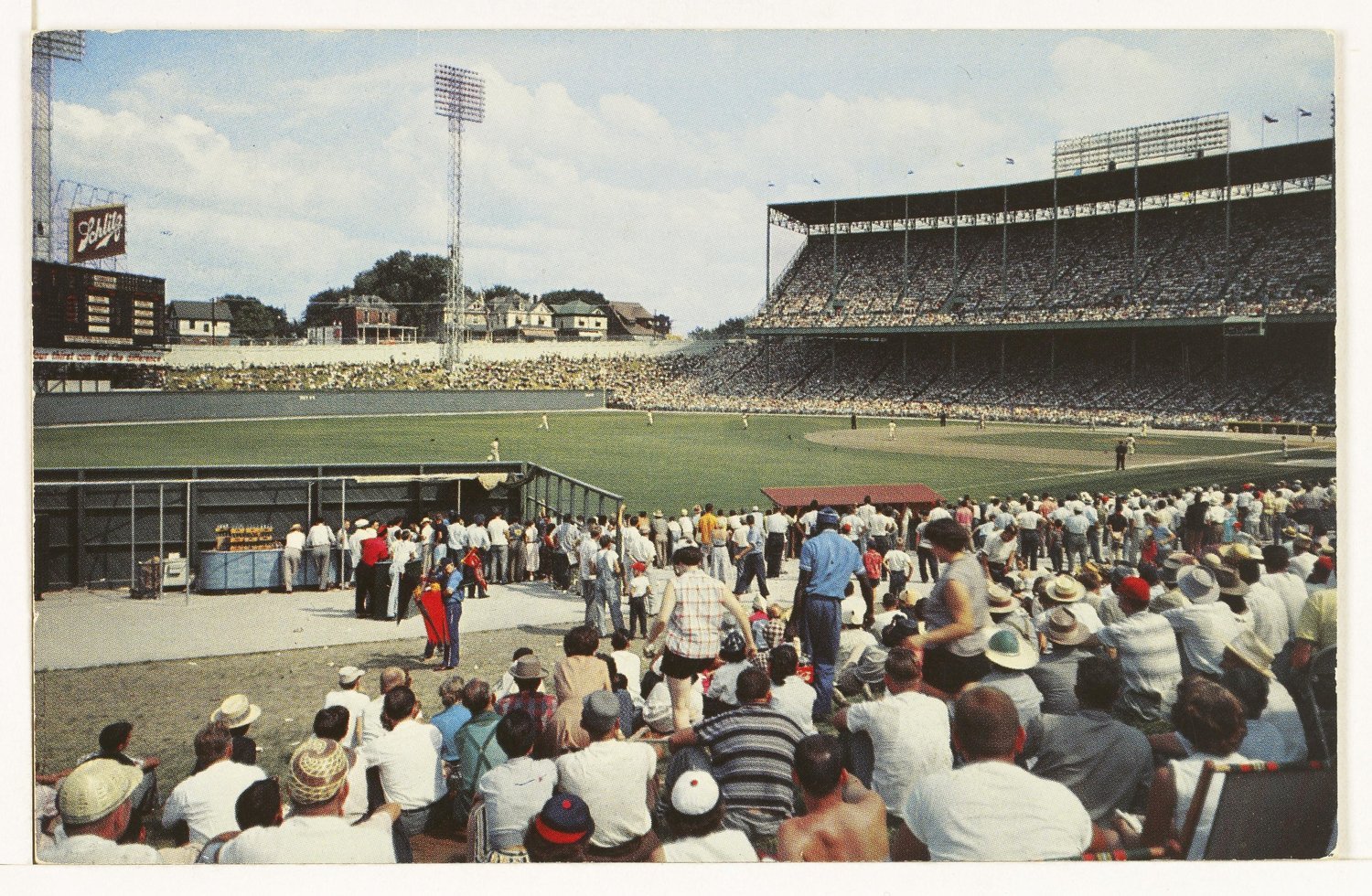
In 1920, Andrew "Rube" Foster convened the meeting that founded the Negro National League at the Paseo YMCA, a stone's throw from 18th and Vine. The Kansas City Monarchs became one of the most dominant and beloved franchises in Black baseball, playing at a municipal stadium just blocks south of the district. Jackie Robinson wore a Monarchs uniform before he broke the color barrier. Satchel Paige pitched here. Buck O'Neil played and managed here. Church services on the east side started an hour early on Sundays when the Monarchs had a home game, because the congregation was going to the ballpark after the sermon, dressed in their Sunday best, often arriving by parade from the district itself.
Now hold that. Do not move it to a separate slide.
During those same decades, in those same blocks, Kansas City became one of the most important jazz cities in the world. Count Basie lived on 18th Street. Charlie Parker grew up here. More than fifty nightclubs operated in and around the district during the 1920s and 1930s, powered by the wide-open Pendergast machine that ignored Prohibition and let the music run all night. The Mutual Musicians Foundation, Local 627, held after-hours sessions that ran until dawn. Bennie Moten's Kansas City Orchestra, Walter Page's Blue Devils, Jay McShann's band: these were not performing in a vacuum. They were playing for a community that also went to Monarchs games, also ate at the barbecue joints on Brooklyn and Vine, also dressed up on Saturday and made a full night of it.
And about that barbecue.
Henry Perry, the father of Kansas City barbecue, set up his first pit at 18th and Vine around 1911. He sold slabs wrapped in newspaper for a quarter. Charlie Bryant learned the craft working under Perry at 19th and Highland. Arthur Bryant came to visit his brother, got hired, and never left. When Arthur finally moved the restaurant to 18th and Brooklyn in 1958, it sat four blocks from Municipal Stadium, where the Kansas City Athletics and later the Chiefs played. Visiting teams, fans, and celebrities all ended up at Bryant's before or after the game. Gates started at 19th and Vine. Charlie Parker and Dizzy Gillespie, the two musicians who would pioneer bebop and change the trajectory of American music, met for the first time at Old Kentucky Barbecue in the district before walking around the corner to jam at the Mutual Musicians Foundation.
Read that again. The two most important innovators in modern jazz history met at a barbecue restaurant in the same neighborhood where the Negro Leagues were founded, where fifty clubs were running live music every night, where pitmasters were smoking meat with hardwood from the West Bottoms, where Black Kansas Citians had built an entirely self-sufficient economy because segregation would not let them build anywhere else.
That is not a branding exercise. That is a civilization.
And no other American city can touch it.
Nashville owns music. Fair enough. Austin used to. But neither of them can claim a globally significant sports history rooted in the same neighborhood as their music story. Dallas and Denver and Philadelphia can call themselves sports cities, but none of them have a cultural district where jazz, professional baseball, and barbecue were literally born on the same corner. The intersection of those three things, produced by the same Black community, in the same few square blocks, is completely unique to Kansas City. It is not a slogan somebody workshopped. It is what actually happened.
So when I hear the sports boosters talk about "escape velocity" and making sports synonymous with the Kansas City brand, I understand the impulse. The receipts are real. Three Super Bowl wins in five years. The first purpose-built women's professional sports stadium in the world. A World Cup that brought 650,000 visitors and global attention. Sporting KC as a founding MLS club. The Royals building a new downtown ballpark. The Chiefs projecting $1.5 billion in annual economic impact from their new stadium complex. This is not a city with a casual relationship to sports.
But if you tell that story without music and barbecue, you are describing any midsize American city that happens to have winning teams. You are competing with Buffalo and Cincinnati and Green Bay on enthusiasm alone. You strip out the thing that makes Kansas City actually different, which is not that we love sports, but that our sports history is inseparable from our music history and our food history, and all three trace back to the same community and the same ground.
Here is what I think Kansas City should actually do.
Stop branding in halves. The American Jazz Museum and the Negro Leagues Baseball Museum already share one building at 18th and Vine. That is not an accident of real estate. It is a physical expression of a truth the city keeps talking around: these stories belong together. The city's brand is not "sports city" or "music city" or "barbecue city." It is the city where Black culture built all three, in the same neighborhood, at the same time. That is the brand. Say it plainly and build around it.
Use the current momentum to invest in the actual ground. Kansas City just hosted the World Cup. The Chiefs are a dynasty. CPKC Stadium is rewriting what women's sports infrastructure looks like. The Royals are building downtown. There has never been more sports energy in this city. But if the only thing that energy produces is new stadiums and development deals west of Troost, then the city is repeating the same pattern it always repeats: extracting narrative value from 18th and Vine while investing real dollars somewhere else. Tie tourism, sports, and convention money to permanent investment in the district. If the neighborhood is good enough to open Bob Kendrick's remarks at a billion-dollar stadium announcement, it is good enough to receive a fraction of the capital that announcement unlocked.
Build the Office of Music at 18th and Vine, and connect it to sports programming. Kansas City holds a UNESCO Creative City of Music designation. We have a Global Music Strategy working group. We have the live music infrastructure, the history, and the talent. What we do not have is a permanent civic institution that treats music as economic development rather than decoration. An Office of Music rooted in 18th and Vine, connected to the sports and tourism apparatus the city is already building, would be the structural link between these stories. It would say: this is not three marketing campaigns running in parallel. This is one identity.
I run a brewery at 2010 Vine Street. Missouri's first Black-owned brewery, in a building that sat vacant for roughly forty years. I am also a musician, a rapper, a producer, and someone who has spent years arguing that Kansas City should lead with music. I am not abandoning that argument. I am expanding it. Because the honest version of the story is bigger than what I was telling.
The sports people are not wrong that Kansas City has a generational opportunity to define itself through athletics. They are wrong to act like that story starts with Patrick Mahomes or a World Cup bid. It starts with Satchel Paige and Buck O'Neil and the Paseo YMCA. It runs through Municipal Stadium and Arthur Bryant's and the Blue Room. It lives in the same geography where Count Basie played piano and Henry Perry dug his pit and Charlie Parker met Dizzy Gillespie over a plate of barbecue.
I was wrong to resist the sports argument. Not because my music argument was weak, but because I was defending a half-truth when the whole truth was stronger. Kansas City does not need to pick a lane. It needs to tell the full story of 18th and Vine: the neighborhood where sports, music, and barbecue were never separate, where Black Kansas City built something no other American city can replicate, and where the brand the rest of the city keeps searching for has been sitting in plain sight for a hundred years.
We do not need to invent an identity. We need to stop splitting it apart.